
Design Thinking Isn’t Dead. It Just Got an AI Upgrade.
Updating Human + AI design practices for L&D

If you’ve been in L&D for any length of time, you know Design Thinking. You’ve run the empathy interviews, facilitated the sticky-note ideation sessions, and built the storyboard prototypes. And here’s the thing: those foundational practices still matter. The five phases — Empathize, Define, Ideate, Prototype, and Test — remain one of the most powerful frameworks for building learning experiences that actually work.
But in 2026, the way we execute each phase has fundamentally changed, or will change for the folks trying to sort through, frankly, the noise and hype.
The shift isn’t about replacing Design Thinking with AI. It’s about supercharging every phase with tools and practices that didn’t exist even two years ago. For L&D teams moving from traditional buy-and-deploy vendor models toward building with AI-native tools, this is the another playbook for making that transition real. [My last playbook on Work + AI + Humans or “The Purpose Is People” is here.]
Here are my five AI-optimized Design Thinking practices that can transform how your teams research, design, build, and deliver more effective learning, starting today, with greater speed.
1. Synthetic Learner Personas: Empathy at Scale
The traditional empathy phase is valuable, but can be slow based on my experience. Scheduling interviews with busy field reps, managers, or frontline workers can take weeks. By the time you synthesize findings, priorities may have already shifted.
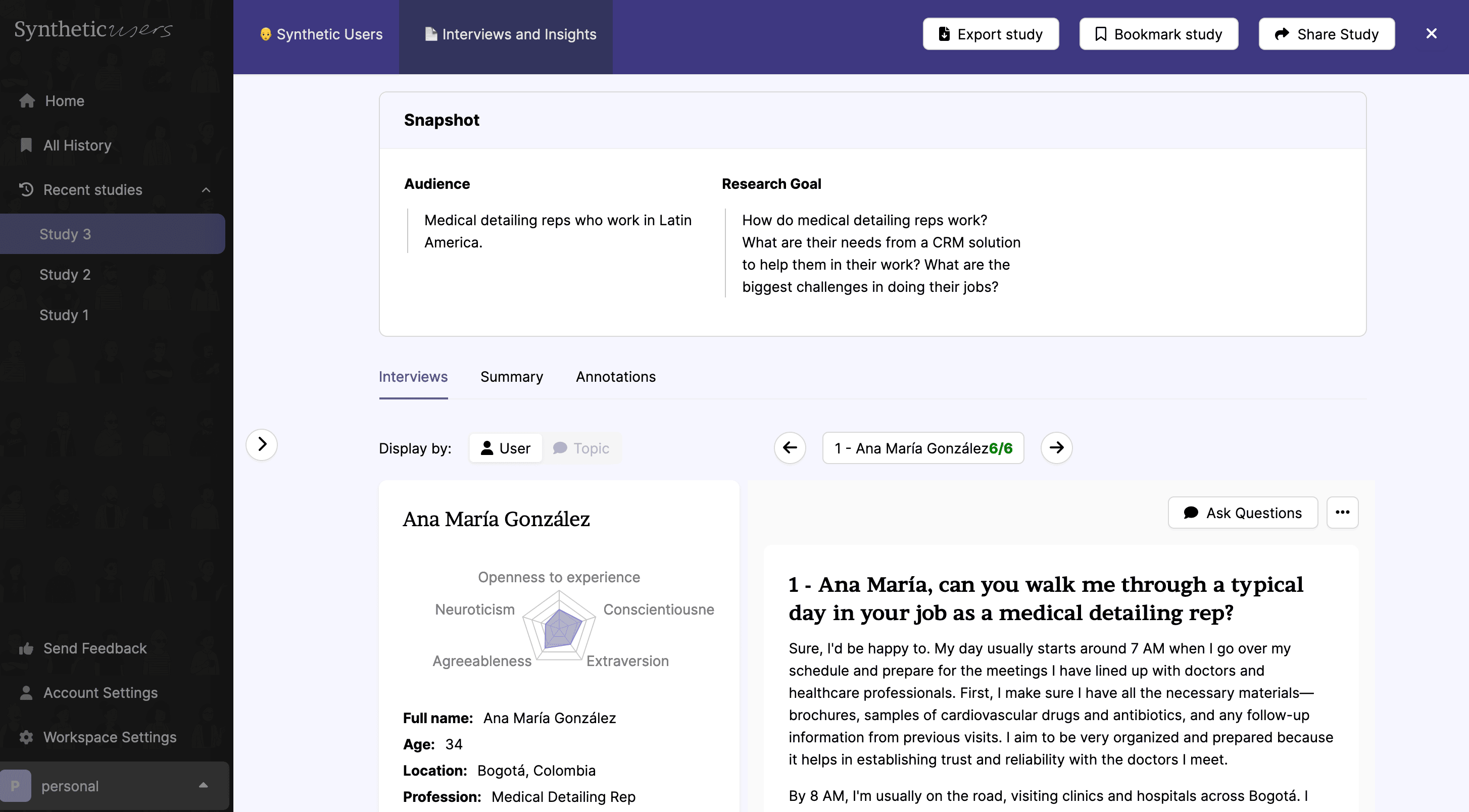
The modern practice: Synthetic personas — AI-generated learner profiles built from real data — are changing the game. Platforms like Synthetic Users now allow teams to create AI participants grounded in actual behavioral data, CRM feedback, past training performance, and survey results. These aren’t generic chatbot responses; when trained on your organization’s data, they simulate how real learners think, react, and resist.
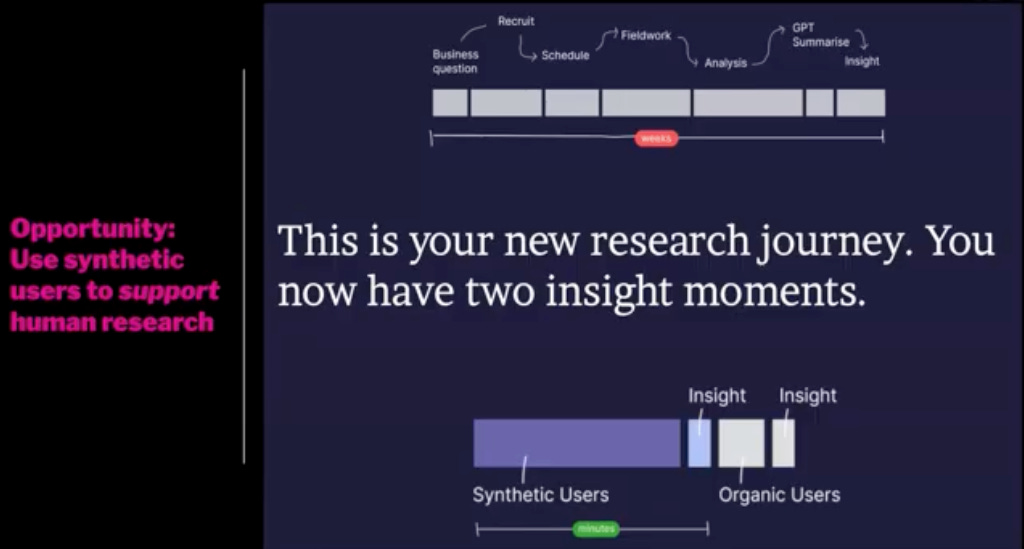
What this looks like in practice: Imagine you’re designing a new product launch training for a global sales team. Instead of waiting three weeks to schedule a focus group, you run a “shadow test” — pitching your concept to an AI model that simulates the common pain points and cognitive biases of your sales population. You iterate 20 times in an afternoon instead of once over a quarter.
Bain & Company recently highlighted how a major telecom provider used synthetic customer personas to test features, pricing, and promotion strategies, with the model’s predictions increasingly aligning with real-world outcomes over time. [1]
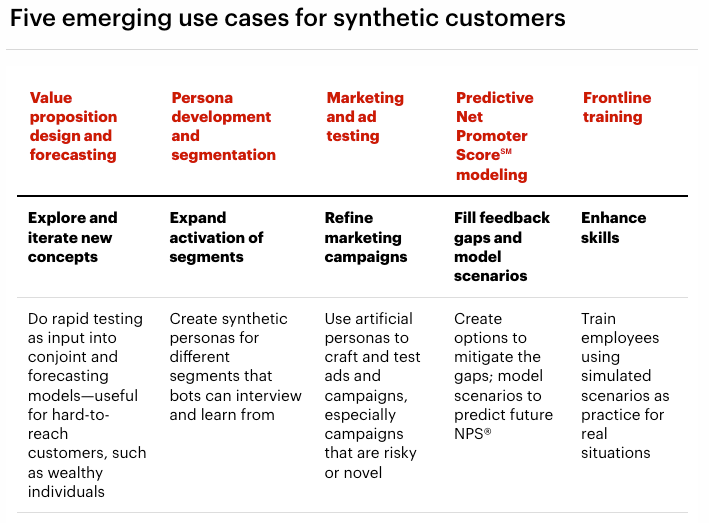
Bain & Company; How Synthetic Customers Bring Companies Closer to the Real Ones
The Nielsen Norman Group has documented that AI-generated feedback aligns with human feedback over 95% of the time in well-configured scenarios. “After specifying the user group, study goal and interview type, Synthetic Users provides a set of persona-like profiles and interview transcripts. Practitioners can continue the conversation via their keyboard and generate a summary report.” [2].
The key: Synthetic personas are a starting point, not a replacement. Use them to form hypotheses fast, then validate with real learners. Think of it as going from zero insight to an 80% draft overnight.
2. Generative Ideation: Breaking the “Sameness” Trap
If you’ve ever run a brainstorming session as or with an L&D team, you know the pattern. Someone suggests a video series. Someone else suggests a scenario-based module. Everyone nods. The ideas are fine, but they’re predictable. Just saying.
The modern practice: Use large language models as creative sparring partners. The goal isn’t to replace human creativity; it’s to expand the range of what your team even considers. Ask an LLM to generate 50 wildly different instructional strategies for a single learning objective — “Design this compliance training as if it were an escape room,” “as a daily podcast series,” “as a competitive team challenge modeled after a cooking show.” Serious play for instructional designers? Yep, and more..
What this looks like in practice: A pharmaceutical company redesigning its field training asked an AI to generate unconventional approaches to drug education. Among the AI’s suggestions: a narrative-driven mobile experience where reps “follow a patient” through a treatment journey, making decisions at each stage. The team would never have landed there through a traditional brainstorm, but it became their highest-engagement module.
The eLearning Industry’s 2026 trends report notes that L&D teams using AI for scenario creation are moving from “training event” to “training gym” — giving employees multiple reps, not single exposures. [3] The organizations pulling ahead are the ones using AI to break the sameness of corporate L&D by exploring creative hooks that human teams might self-censor. [4]
The key: Don’t use AI to generate the final idea. Use it to blow open the aperture. Then let your team’s expertise curate and refine.
3. From PowerPoint Prototype to Working Product
This is where things get exciting for L&D teams who’ve always been bottlenecked by IT capacity or vendor timelines.
The prototype phase used to mean wireframes, storyboards, or a polished PowerPoint deck that tried to communicate “what this could feel like.” Stakeholders would squint at a slide and say, “I think I get it?”
The modern practice: With the rise (or perhaps, already, the current fall) of “vibe coding” — a term coined by AI researcher Andrej Karpathy in 2025 and named Collins Dictionary’s Word of the Year [5] — L&D professionals can now describe what they want in plain language and have AI generate a working, interactive prototype. Platforms like Lovable, Bolt.new, and Replit have made it possible for non-developers to build functional mini-apps in hours, not weeks. [6]
What this looks like in practice: Instead of showing leadership a mockup of a new AI-powered coaching tool, your team builds a working version. A real, clickable, interactive prototype that stakeholders can experience firsthand. The conversation shifts from “what it might be” to “how it actually feels.” According to industry data, organizations using vibe coding tools are seeing development cycles that are up to 5.8 times faster than traditional approaches. [7]
Simitri’s 2026 Learning Trends Report found that AI-powered tools are reducing course creation time by up to 70%. [8] For L&D teams transitioning away from vendor dependency, this is the unlock: you can prototype, test, and iterate without a development queue.
The next-gen Design Thinking takeaway: You don’t need to be a developer. Start with one small concept — a flashcard app, a scenario branching tool, a quick knowledge check — and describe it conversationally to one of these platforms. You’ll be surprised at what comes back.
4. Continuous Empathy: Design Thinking That Never Stops
Here’s a problem the traditional model never solved: Design Thinking ended at the “Test” phase. You launched your training, collected a post-course survey, and moved on to the next project. If the module was failing in Week 2, you might not know until the quarterly review.
The modern practice: Agentic feedback loops. AI agents can now continuously monitor learner signals — LMS completion patterns, Slack discussions, support tickets, email sentiment, even drop-off points within a module — and surface issues in real time. This was a key emphasis in my Substack piece “Let Learning Breathe”. That is, how agentic and other approaches will remove the “containers” of a course (duration, scope, use cases…), allowing it to dynamically regenerate or update the training in real-time with new enterprise data and content. Think about Teslas’ “over the air” software updates while you sleep.
What this looks like in practice: Coursera uses AI to analyze course feedback continuously, enabling them to update and improve content on an ongoing basis rather than waiting for periodic reviews. [9] Enterprise L&D teams are borrowing from the gaming industry’s “live-service” model, where content is patched and updated based on real-time player behavior data. Imagine knowing within the first 24 hours of a global training launch that Module 3 is causing confusion in APAC, that the scenario in Module 5 doesn’t resonate with senior reps, and that completion rates spike when learners access the content on mobile during commute hours.
T-Mobile applied a similar approach to customer-facing feedback, using AI sentiment analysis to detect emerging issues and address them proactively — resulting in a 73% reduction in complaints. [10]
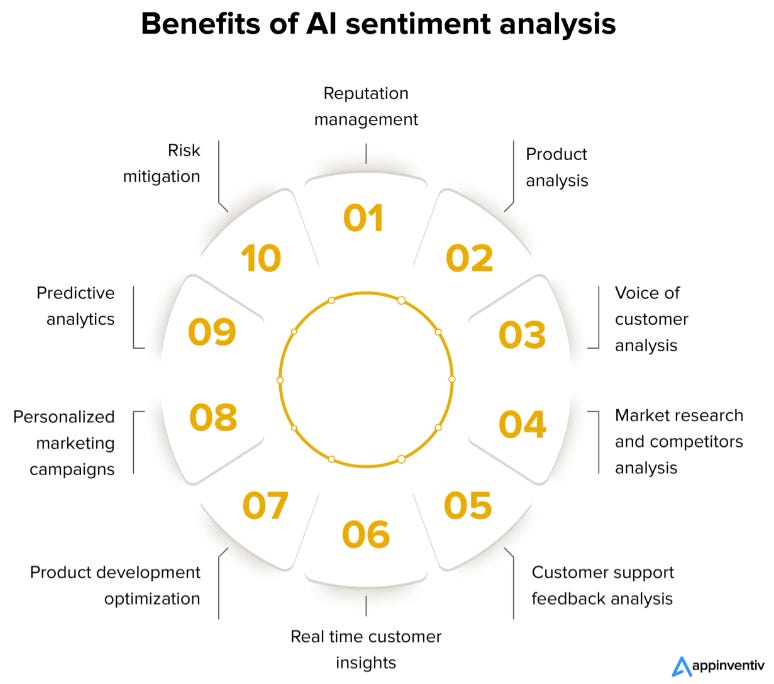
The same principle applies to internal learning: don’t wait for the end-of-course survey to tell you something is broken.
Net net: Set up your feedback channels before launch, not after. Connect your LMS and LXP data, communication tools, and AI analysis layer so you’re listening from Day 1.
5. Multi-Modal Design: Meeting Learners Where They Actually Are
The final evolution is about designing for real life, not the idealized version of it.
Traditional L&D tends to design in one modality: a course, a video, a document. But learners live across contexts. A sales rep might need a quick refresher while walking into a client meeting, a deep-dive scenario while at their desk, and a podcast-style overview during a long drive.
The modern practice: AI makes it practical to design multi-modal learning systems. The same core content can be adapted into an interactive audio summary, a short video, a text-based cheat sheet, or a 3D simulation — and AI can handle much of the conversion. Think of it as designing the “learner journey map” the way product teams design customer journey maps: identifying exactly when someone needs audio, when they need video, when they need a quick AI-summarized reference card, and when they need hands-on practice.
What this looks like in practice: McKinsey’s 2025 research found that employees are already using AI tools three times more than their leaders expect. [11] They’re not waiting for L&D to catch up.
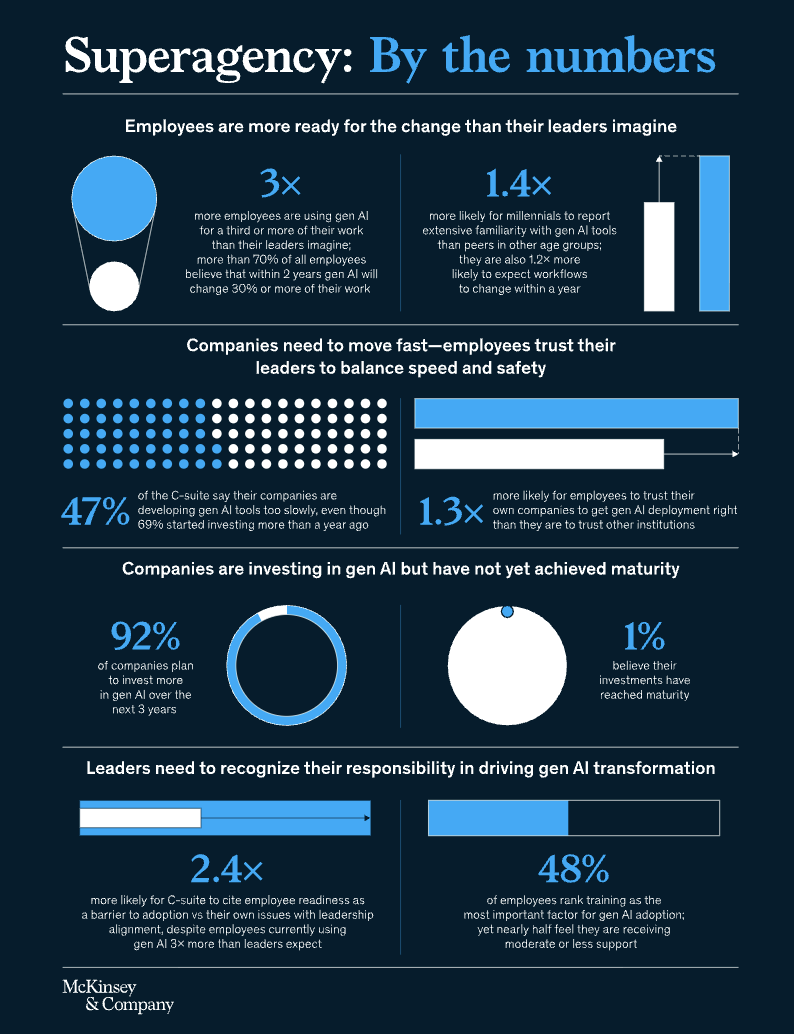
Superagency in the workplace: Empowering people to unlock AI’s full potential
Progressive L&D teams are getting ahead of this by designing systems that meet learners in their actual workflow — not just in the LMS. A financial services firm recently implemented an AI-augmented social learning platform where employees shared real-time insights that AI then curated into themed knowledge hubs, dramatically improving knowledge retention because learning happened organically within the flow of work. [12]
Somewhat hesitant? Start by mapping one role end to end. Where does this person actually learn? When are they at a desk? When are they mobile? When do they need a quick answer versus deep understanding? Then design the modality to match the moment.
Making the Shift: Where to Start
Pick one upcoming project and apply just one of these practices. Use synthetic personas to speed up your empathy phase, or try vibe coding a quick prototype instead of building a slide deck. You don’t need to transform everything at once.
Run a 2-week pilot. The Simitri Learning Trends Report notes that 60% of organizations are already experimenting with AI in learning design, but many are stuck in early-stage exploration. [8] The teams that pull ahead are the ones that move from “testing AI” to “building with AI” on a real project with a real deadline.
Measure what changes. Track the time from concept to prototype. Track learner feedback quality. Track how quickly you can iterate after launch. These are the metrics that demonstrate the value of this new approach to leadership.
Design Thinking was never about the sticky notes. It was about centering the learner, moving fast, learning from feedback, and building what actually works. AI doesn’t change that mission — it accelerates it in ways that would have seemed impossible just two years ago.
The L&D teams that thrive in 2026 won’t be the ones with the biggest vendor contracts. They’ll be the ones who design like product teams, build like startups, and listen like the best researchers — powered by tools that make all of it faster, sharper, and more responsive.
If we measure success using old practices and metrics, we’ll optimize for old outcomes.
Design at a new speed. Our business demands this.
Acknowledging the use of Gemini, Perplexity, ChatGPT, and Claude for research, formatting, challenging assumptions and aiding the creative process.
The views and opinions expressed in this article are solely those of the author and do not necessarily reflect the views of the author’s employer or any affiliated organizations.
Licencing
Unless otherwise noted, the contents of this series are licensed under the Creative Commons Attribution 4.0 International license; CC0 1.0 Universal (CC0 1.0) Public Domain Dedication.
Should you choose to exercise any of the 5R permissions granted you under the Creative Commons Attribution 4.0 license, please attribute me in accordance with CC’s best practices for attribution.
If you would like to attribute me differently or use my work under different terms, contact me at https://www.linkedin.com/in/marcsramos/.
References
[1] Bain & Company. (2025). How synthetic customers bring companies closer to the real ones. https://www.bain.com/insights/how-synthetic-customers-bring-companies-closer-to-the-real-ones/
[2] Nielsen Norman Group. (2025, September 24). Synthetic users: If, when, and how to use AI-generated “research.” https://www.nngroup.com/articles/synthetic-users/
[3] Foxtery. (2025, December 24). How corporate learning will change in 2026: Predictions from 18 L&D experts. https://foxtery.com/blog/employee-learning-trends-2026
[4] eLearning Industry. (2025, December 3). Corporate L&D trends 2026: The view from the trenches. https://elearningindustry.com/corporate-ld-trends-2026-the-view-from-the-trenches
[5] Karpathy, A. (2025, February). Vibe coding [Concept introduction]. Wikipedia. https://en.wikipedia.org/wiki/Vibe_coding
[6] Vestbee. (2025, October 8). Not just Lovable: Who and how is driving the vibe coding revolution in AI economy. https://www.vestbee.com/insights/articles/who-and-how-is-driving-the-vibe-coding-revolution
[7] Natively. (2026). What is vibe coding? Complete guide 2026. https://natively.dev/articles/what-is-vibe-coding
[8] Blend-ed. (2026). How AI is redefining the role of L&D leaders in 2026. Citing Simitri Learning Trends Report 2026. https://www.blend-ed.com/blog/ai-redefining-ld-leaders
[9] Cobbai. (2025, October 26). Real-time AI customer sentiment analysis. https://cobbai.com/blog/real-time-ai-customer-sentiment-analysis
[10] Appinventiv. (2024, December 26). The impact of AI sentiment analysis: Benefits and use cases. https://appinventiv.com/blog/ai-sentiment-analysis-in-business/
[11] McKinsey & Company. (2025, January). Superagency in the workplace: Empowering people to unlock AI’s full potential at work. https://www.mckinsey.com/capabilities/tech-and-ai/our-insights/superagency-in-the-workplace-empowering-people-to-unlock-ais-full-potential-at-work
[12] eLearning Industry. (2025, December 23). Learning and development in 2025: A year of acceleration—and what L&D leaders must prepare for in 2026. https://elearningindustry.com/learning-and-development-in-2025-a-year-of-acceleration-and-what-ld-leaders-must-prepare-for-in-2026